The History of Navajo Turquoise Jewelry: From Sacred Stone to Contemporary Art
Introduction
Few forms of Native American art are as instantly recognizable as Navajo turquoise jewelry. For generations, the Diné people—known to outsiders as the Navajo—have transformed turquoise and silver into some of the most celebrated jewelry in the world. More than decorative objects, these pieces carry stories of cultural resilience, spiritual belief, artistic innovation, and economic adaptation.
Today, Navajo turquoise jewelry remains one of the most collected forms of Indigenous art in North America. From traditional squash blossom necklaces to contemporary sculptural silverwork, Navajo artists continue to evolve the craft while honoring centuries of tradition.
Why Is Turquoise Important to the Navajo?
Turquoise has held cultural and spiritual significance throughout the American Southwest for centuries. Long before silver jewelry became common, Indigenous peoples valued turquoise for its beauty, rarity, and symbolic connection to the natural world.
Among many Diné families, turquoise is associated with protection, blessings, prosperity, and harmony. The stone's sky-blue color often symbolizes the relationship between the earth and the heavens. Turquoise has historically been worn during ceremonies, gifted among family members, and passed down through generations as treasured heirlooms.
Because of these meanings, turquoise became far more than a decorative gemstone—it became a visible expression of cultural identity.
The Origins of Navajo Jewelry
Contrary to popular belief, traditional Navajo jewelry was not originally made from silver. Archaeological evidence shows that Indigenous peoples of the Southwest used turquoise in beads, pendants, and ceremonial objects long before European contact.
The transformation of Navajo jewelry began during the mid-19th century when Diné craftsmen learned silversmithing techniques from Mexican artisans in the Southwest. Historians generally credit Atsidi Sani ("Old Smith") as one of the first Navajo silversmiths. He learned metalworking from a Mexican craftsman and subsequently taught the skill to other Navajo artisans. Over time, an entirely new artistic tradition emerged that blended Indigenous aesthetics with adapted metalworking techniques.
Early Navajo silversmiths often melted silver coins and repurposed silver objects to create jewelry, belts, buckles, horse gear, and ceremonial adornments. Their work quickly became known for bold forms, hand-stamped patterns, and exceptional craftsmanship.
When Did Turquoise Become Part of Navajo Silver Jewelry?
Although turquoise had been valued for centuries, the widespread combination of turquoise and silver developed later.
By the late 19th century, Navajo silversmiths began setting turquoise stones into silver jewelry. This innovation transformed Southwestern jewelry and created the iconic aesthetic recognized around the world today. Artists combined large natural turquoise stones with hand-forged silver settings, emphasizing both the beauty of the stone and the artistry of the metalwork.
As railroads brought tourists into the Southwest and trading posts expanded, demand for Navajo jewelry increased dramatically. The resulting market encouraged artists to refine techniques and develop new designs while maintaining cultural traditions.
Iconic Navajo Jewelry Designs
Squash Blossom Necklaces
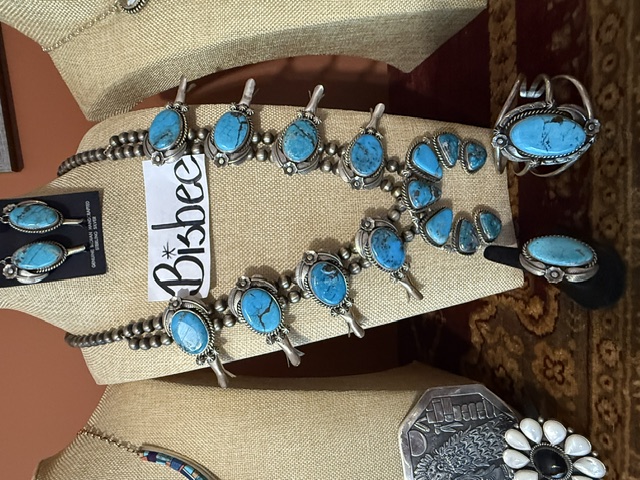
Perhaps the most famous form of Navajo jewelry, the squash blossom necklace emerged during the late 1800s. Despite its name, the design was influenced by Spanish and Mexican decorative traditions. The necklace typically features silver beads shaped like blossoms and a central crescent-shaped pendant known as a naja.
Concho Belts
Concho belts are another hallmark of Navajo craftsmanship. Constructed from silver disks connected by leather or silver links, these belts became symbols of wealth, artistry, and status. They remain highly collectible today.
Turquoise Cuffs and Cluster Jewelry
Large turquoise cuff bracelets and cluster-style jewelry became especially popular during the twentieth century. These pieces showcased multiple stones arranged in intricate patterns and demonstrated the silversmith's ability to balance symmetry, color, and texture.
Historical Navajo Jewelry Artists
Atsidi Sani (c. 1830–1918)
Often regarded as the father of Navajo silversmithing, Atsidi Sani helped establish one of the most influential Indigenous art traditions in North America. His teachings spread throughout the Navajo Nation and laid the foundation for generations of artists.
Atsidi Chon
Atsidi Chon was an important early silversmith credited with advancing Navajo jewelry-making traditions. Historical accounts associate him with early turquoise-set silver jewelry and the spread of silversmithing knowledge throughout the region.
Hosteen Klah (1867–1937)
While best known as a ceremonial leader and weaver, Hosteen Klah helped preserve Diné cultural traditions during a period of significant social change. His influence on Native arts and cultural preservation remains profound.
Modern Artists
Tommy Singer
Tommy Singer was a renowned Navajo silversmith and jewelry artist celebrated for pioneering the chip-inlay technique in Native American jewelry. Born in 1940, he gained international recognition for creating handcrafted sterling silver pieces featuring turquoise, coral, and traditional Navajo designs. Tommy is credited with inventing crushed turquoise and coral inlaid jewelry. Tommy Singer's innovative craftsmanship helped modernize Southwestern jewelry while preserving Native American cultural heritage. Today, his jewelry remains highly sought after by collectors and enthusiasts for its artistic value, authenticity, and lasting influence on Navajo silversmithing traditions.
Leonard Platero Jr.
Leonard Platero Jr. is a contemporary Navajo jewelry artist known for continuing the silversmithing tradition of his family within Native American craftsmanship. Working primarily in sterling silver, he is recognized for his detailed handmade designs that often feature traditional Navajo motifs and influences from Southwestern art. His work reflects a blend of cultural heritage and modern craftsmanship, contributing to the ongoing legacy of Navajo jewelry-making. Leonard Platero Jr. is appreciated by collectors for authentic, handcrafted Native American jewelry that emphasizes quality, tradition, and artistic identity.
Stewart Billie
Stewart Billie is a Native American (Navajo) silversmith and jewelry artist known for his handcrafted sterling silver jewelry featuring traditional Southwestern and Navajo design elements. His work often includes detailed stamp work, turquoise stone settings, tufa casting, and classic motifs that reflect Indigenous cultural heritage and craftsmanship. Stewart Billie’s jewelry is valued for its authenticity, traditional artistry, and connection to Navajo silversmithing traditions, making his pieces sought after by collectors of Native American art and jewelry.
Sunshine Reeves
Sunshine Reeves is a highly respected Navajo silversmith known for his intricate sterling silver jewelry featuring detailed stamp work and traditional Navajo patterns. As part of the famous Reeves silversmithing family, he is recognized for elevating contemporary Native American jewelry through precision craftsmanship and bold geometric designs. His work often includes deep repoussé, heavy stamping, and turquoise accents, making each piece distinctive and highly collectible. Sunshine Reeves is widely regarded as one of the leading Native American jewelry artists, with a strong influence on modern Navajo silversmithing and Southwestern jewelry design.
Where can I Find Native American Jewelry Like This?
Find a reputable dealer like hear at http://www.jewelryroadshow.com or live Native Americacn Jewelry shows like Jewelry Roadshow Live
The Role of Turquoise in Modern Navajo Culture
Turquoise remains deeply important within contemporary Diné communities. Many artists continue to source and work with natural stones, while collectors increasingly seek pieces that reflect both authenticity and artistic excellence.
Modern Navajo jewelers balance tradition and innovation by incorporating contemporary design elements while preserving techniques passed down through generations. This blend of old and new ensures that Navajo jewelry remains a living art form rather than a historical artifact.
At major events such as the Santa Fe Indian Market, collectors from around the world gather to acquire works directly from Indigenous artists, highlighting the continuing vitality of Navajo jewelry traditions. (Vogue)
How to Identify Authentic Navajo Turquoise Jewelry
When purchasing Navajo jewelry, buyers should look for:
-
Artist signatures or hallmarks
-
Sterling silver craftsmanship
-
Provenance from reputable Native-owned galleries or markets
-
Documentation identifying the artist
-
Natural or stabilized turquoise sourced from known mining regions
Experts note that the market contains many imitation pieces, making artist attribution and provenance increasingly important. (Reddit)
Conclusion
The story of Navajo turquoise jewelry is ultimately a story of adaptation, creativity, and cultural endurance. From the pioneering work of Atsidi Sani to the contemporary innovations of artists like Cody Sanderson and Nanibaa Beck, Navajo jewelers have continually reimagined what turquoise and silver can become.
What began as a meeting of Indigenous tradition and introduced silversmithing techniques evolved into one of the most influential art forms in American history. Today, every handcrafted turquoise bracelet, squash blossom necklace, and silver ring carries forward a legacy that spans generations—a legacy rooted in the Diné people's enduring relationship with artistry, identity, and the sacred beauty of turquoise.