Why Turquoise Is Sacred in Native American Culture
For thousands of years, turquoise has been treasured throughout the Southwest. Long before silverworking became widespread in the late 1800s, Native peoples carved turquoise into beads, pendants, mosaics, and ceremonial objects.
Many tribes regard turquoise as:
-
A stone of protection
-
A symbol of the sky and water
-
A representation of life, prosperity, and healing
-
A spiritual gift connecting the earth with the heavens
Because each tribe has its own cultural traditions, turquoise jewelry differs significantly in style, symbolism, and craftsmanship.
Hopi Jewelry: Masterpieces of Silver Overlay
The Hopi people of northeastern Arizona are internationally known for developing one of the most recognizable jewelry styles in Native American art.
Rather than emphasizing large turquoise stones, Hopi artists often create jewelry using the silver overlay technique, where one sheet of sterling silver is hand cut, textured, and soldered over another. Traditional symbols include:
-
Rain clouds
-
Kokopelli
-
Migration patterns
-
Corn
-
Eagle feathers
-
Kachina imagery
Turquoise is frequently incorporated as an accent, allowing both the stone and the silver artistry to shine.
Legendary Vintage Hopi Artists
Collectors actively seek works by:
Contemporary Hopi Artists
Today's respected Hopi silversmiths include:
Santo Domingo (Kewa Pueblo): Ancient Traditions Meet Modern Design
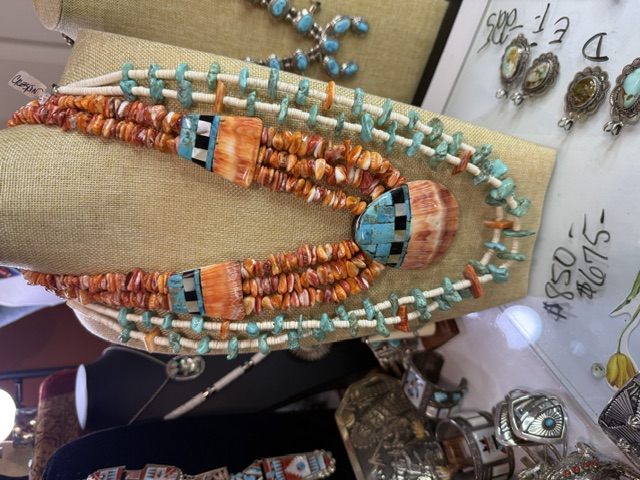
The Kewa Pueblo (formerly Santo Domingo Pueblo) has produced turquoise jewelry for centuries.
Before silversmithing became common, Kewa artisans created remarkable necklaces using:
-
Turquoise
-
Shell
-
Jet
-
Spondylus shell
-
Pipestone
Today, they're especially known for:
These timeless designs continue to influence Native American jewelry makers worldwide.
Vintage Kewa Artists
Collectors search for works by:
-
Leo Poblano
-
Mary Tafoya
-
Frank Dishta
Contemporary Kewa Artists
Modern masters include:
-
Joline Bird
-
Mary Coriz
-
Anthony Lovato
-
Perry Shorty
-
Delbert Crespin
-
Crespin Family
Acoma Pueblo: Precision Inlay and Fine Stonework
Although Acoma Pueblo is better known for pottery, many talented jewelers have earned recognition for their exceptional turquoise jewelry.
Acoma artists frequently combine:
-
Turquoise
-
Coral
-
Jet
-
Mother of Pearl
-
Sugilite
using intricate inlay techniques that require extraordinary precision.
Notable Acoma Artists
Collectors admire works from:
Laguna Pueblo: Elegant Contemporary Design
Laguna Pueblo artists often blend traditional craftsmanship with modern aesthetics.
Many Laguna jewelers create:
Legendary Laguna Artists
Some of the most celebrated include:
-
Lee Yazzie
-
Iva Hoskie
-
Mary Lovato
Modern Laguna Artists
Today's respected artists include:
-
Don Dewa
-
Michael Perry
-
Marc Antia
Apache Turquoise Jewelry
Apache jewelry receives less attention than Navajo or Hopi work, making quality examples especially desirable.
Apache artists traditionally favored:
-
Turquoise
-
Shell
-
Beadwork
-
Silver
Many contemporary Apache jewelers combine traditional symbolism with modern Southwestern styles.
Ute Jewelry Traditions
The Ute people of Colorado and Utah have long incorporated turquoise into ceremonial and personal adornment.
Traditional Ute jewelry often features:
-
Turquoise
-
Trade silver
-
Leather
-
Beadwork
Authentic vintage Ute jewelry is relatively scarce, making it particularly appealing to collectors.
Pueblo Artists Continue to Innovate
Across New Mexico's Pueblos—including San Felipe, Tesuque, Cochiti, Santa Clara, and Isleta—artists continue producing exceptional turquoise jewelry that reflects centuries of artistic heritage while embracing contemporary design.
Each Pueblo maintains distinct traditions that contribute to the incredible diversity of Native American jewelry.
What Makes These Artists Different?
Unlike mass-produced jewelry, Native American handmade jewelry reflects generations of cultural knowledge.
Each artist develops a recognizable style through:
Many collectors eventually learn to identify an artist's work simply by examining craftsmanship and design.
Why Collectors Love Vintage Native American Jewelry
Vintage Native American jewelry offers qualities rarely found in modern production:
-
Historic craftsmanship
-
Natural untreated turquoise
-
Hand-fabricated silverwork
-
Older turquoise mines no longer producing
-
Increasing rarity
Many vintage artists worked with legendary turquoise mines including:
-
Sleeping Beauty
-
Bisbee
-
Number Eight
-
Blue Gem
-
Morenci
-
Lone Mountain
-
Royston
-
Carico Lake
These stones often display colors and matrix patterns that are increasingly difficult to obtain today.
Contemporary Native American Artists Are Carrying the Tradition Forward
Today's Native American jewelers honor traditional methods while introducing innovative designs.
Many combine:
-
Traditional hand fabrication
-
Museum-quality lapidary work
-
Contemporary styling
-
Rare natural turquoise
-
Mixed materials including gold, diamonds, fossil ivory, and exotic stones
Their work ensures Native American jewelry remains one of America's most respected living art forms.
How to Buy Authentic Native American Turquoise Jewelry
When purchasing Native American jewelry, look for:
Learning about individual artists and tribal traditions helps collectors make informed purchases while supporting Native American artisans.
Experience the Diversity of Native American Jewelry at Jewelry Roadshow Live (JRSL)
At Jewelry Roadshow Live (JRSL), we celebrate far more than Navajo and Zuni jewelry. We proudly feature remarkable handmade pieces from Hopi, Kewa Pueblo (Santo Domingo), Acoma, Laguna, and many other Native American artists.
Whether you're searching for a vintage collector's piece, a museum-quality heirloom, or a contemporary creation from today's talented Native American silversmiths, our goal is to connect collectors with authentic works that honor generations of artistic tradition.
Every piece tells a story—and every artist continues a legacy that deserves to be celebrated.
Frequently Asked Questions
Which Native American tribes use turquoise besides the Navajo and Zuni?
Many tribes use turquoise, including the Hopi, Kewa Pueblo (formerly Santo Domingo), Acoma Pueblo, Laguna Pueblo, Apache, Ute, Cochiti, Isleta, San Felipe, Santa Clara, and Tesuque, each with distinct artistic traditions.
Which tribe is known for silver overlay jewelry?
The Hopi are internationally recognized for their intricate sterling silver overlay technique, often accented with turquoise.
What is Kewa Pueblo famous for?
Kewa Pueblo artists are celebrated for handmade heishi necklaces, depression-era mosaic jewelry, tab necklaces, and centuries-old stoneworking traditions.
Is vintage Native American jewelry more valuable?
Many vintage pieces are highly collectible due to exceptional craftsmanship, natural turquoise from historic mines, limited availability, and the reputation of the individual artist.
How can I tell if Native American jewelry is authentic?
Look for artist signatures, sterling hallmarks, tribal attribution, handmade construction, and purchase from trusted dealers who specialize in authentic Native American jewelry.