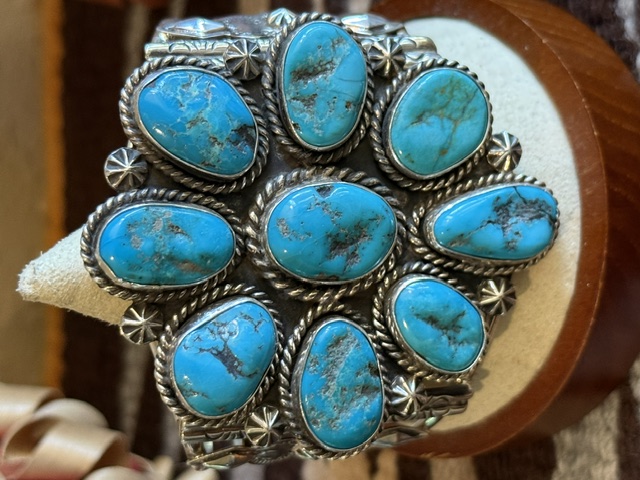
The Ancient History of Turquoise in North America
Long before European settlers arrived, Indigenous peoples mined and traded turquoise throughout the Southwest. Archaeologists have discovered turquoise artifacts dating back more than 2,000 years among ancient cultures such as the Ancestral Puebloans, Hohokam, and Mogollon peoples.
Turquoise was used to create:
-
Beads
-
Pendants
-
Ceremonial objects
-
Mosaics
-
Decorative ornaments
Because turquoise was rare and highly valued, it became an important trade commodity throughout the region.
How Was Turquoise Traded?
Ancient trade routes connected tribes across the Southwest and into present-day Mexico. Turquoise traveled hundreds of miles and was exchanged for shells, textiles, pottery, and other valuable goods.
Archaeological discoveries show that Southwestern turquoise reached major cultural centers throughout Mesoamerica, demonstrating its importance in ancient trade networks.
What Does Turquoise Mean in Native American Culture?
Turquoise holds deep spiritual significance for many Native American tribes. While beliefs vary among cultures, turquoise is often associated with:
Many tribes view turquoise as a sacred stone that carries positive energy and protective qualities.
Navajo Beliefs About Turquoise
For the Navajo people, turquoise is often associated with health, happiness, and protection. Traditional stories connect turquoise to the sky and natural world, and the stone is frequently incorporated into jewelry and ceremonial objects.
Zuni and Pueblo Traditions
The Zuni people have long been recognized for their detailed stonework and turquoise inlay techniques. Turquoise often represents water, fertility, and life-giving forces.
Among Pueblo communities, turquoise has historically been used in ceremonies and spiritual practices while also serving as a symbol of prosperity and protection.
When Did Native American Turquoise Jewelry Become Popular?
Although turquoise has been used for centuries, modern Native American turquoise jewelry emerged during the late 1800s.
Spanish settlers introduced silversmithing techniques to the Southwest. Native artisans adopted these methods and combined them with traditional designs and turquoise stones, creating a distinctive jewelry style that remains popular today.
Navajo Silversmithing
Navajo artisans were among the first Native American silversmiths. Their jewelry often featured:
-
Large turquoise stones
-
Heavy silverwork
-
Concho belts
-
Cuff bracelets
-
Statement rings
These designs became highly sought after throughout the Southwest and beyond.
Zuni Jewelry Techniques
Zuni artists developed intricate stone-cutting methods, including:
-
Needlepoint
-
Petit point
-
Mosaic inlay
-
Channel inlay
These techniques transformed turquoise into highly detailed works of wearable art.
Hopi Jewelry Traditions
Hopi silversmiths became known for overlay jewelry, a technique that layers silver sheets to create symbolic and cultural imagery. While turquoise is used more selectively, it remains an important element of Hopi jewelry design.
Famous Turquoise Mines Used in Native American Jewelry
Several American turquoise mines have become legendary among collectors and jewelry enthusiasts.
Popular turquoise sources include:
-
Sleeping Beauty Mine
-
Kingman Mine
-
Bisbee Mine
-
Morenci Mine
-
Number Eight Mine
-
Royston Mine
Each mine produces turquoise with unique color variations, matrix patterns, and characteristics that help identify its origin.
Why Is Authentic Native American Turquoise Jewelry Valuable?
Authentic Native American turquoise jewelry is valued for more than its materials. Each handcrafted piece represents generations of artistic skill, cultural heritage, and storytelling.
Collectors seek genuine Native American jewelry because of its:
-
Handmade craftsmanship
-
Cultural authenticity
-
Historical significance
-
High-quality turquoise
-
Investment potential
As many historic turquoise mines have closed, naturally mined turquoise has become increasingly rare, adding to its value.
Frequently Asked Questions About Turquoise and Native American Jewelry
How old is turquoise jewelry in Native American culture?
Turquoise has been used by Indigenous peoples in the American Southwest for more than 2,000 years.
Why do Native Americans use turquoise in jewelry?
Turquoise is valued for its beauty, spiritual significance, and cultural symbolism. Many tribes associate it with protection, healing, and good fortune.
Is turquoise considered a sacred stone?
For many Native American tribes, turquoise is regarded as a sacred gemstone connected to nature, spirituality, and cultural traditions.
What tribe is most known for turquoise jewelry?
The Navajo Nation is widely recognized for its turquoise and silver jewelry, although Zuni and Hopi artists have also developed world-renowned turquoise jewelry traditions.
How can you identify authentic Native American turquoise jewelry?
Look for artist hallmarks, tribal affiliation, handcrafted details, natural stone characteristics, and reputable sellers who provide information about the artisan and materials used like www.jewelryroadshow.com and live shows where you can ask questions like Jewelry Roadshow (JRSL) Live Shows.
The Enduring Legacy of Turquoise
Turquoise remains one of the most iconic gemstones in Native American jewelry. Its rich history spans thousands of years, connecting ancient trade routes, spiritual traditions, and exceptional craftsmanship.
Today, Native American artists continue to preserve and evolve these traditions, creating jewelry that honors the past while inspiring future generations. Whether worn as a statement piece or collected as art, turquoise jewelry remains a powerful symbol of culture, heritage, and timeless beauty.